
The RFP Trap Costing Cities Millions in Parking Revenue
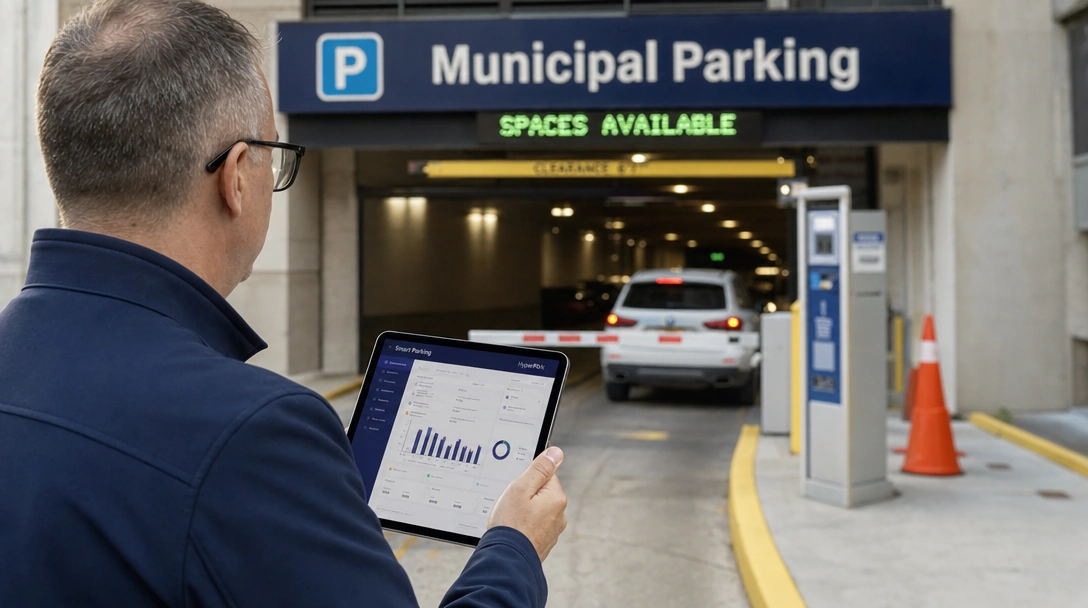
Municipal parking departments lose an average of 18% of potential revenue annually because their RFPs asked the wrong questions. When city councils approve cloud-based parking management software procurements in 2025, they inherit legacy RFP templates written for on-premise systems—criteria that actively hide the operational risks and integration gaps that bankrupt smart-city projects.
In this article, you'll learn the eight non-negotiable RFP requirements municipalities overlooked in failed parking modernization contracts, why "free parking management software" strategies crater within 90 days, and the ITF urban mobility benchmarks that separate winning bids from vendor lock-in disasters.
Why Municipal Parking RFPs Fail Before Vendor Review
Most city parking RFPs copy compliance checklists from legacy ticketing vendors without addressing cloud-native operational requirements. Procurement teams request "multi-site reporting" but omit uptime SLAs, API rate limits, and real-time enforcement synchronization—the exact gaps that caused Portland's 2023 parking platform failure, where citation issuance dropped 40% in the first month post-launch. — explore more on 7 Features Separating Enterprise Parking Software from Consumer Apps.
According to Gartner IT research, 60% of municipal SaaS implementations exceed budget or timeline because RFPs evaluated features instead of integration architecture. When your RFP doesn't specify webhook protocols for barrier hardware or real-time access control failover, vendors submit compliant-but-unworkable proposals. — explore more on Why Static Routes Are Bleeding 18% of Your Fleet Budget.
Cloud vs. Legacy: The Hidden Cost Delta
Cloud-based parking management software shifts capex to opex, but municipal finance officers still write RFPs demanding perpetual licensing and on-premise servers. This mismatch creates a $400K–$1.2M cost delta over five years when cities pay for both cloud subscriptions and unused server infrastructure they contractually required. — explore more on The Hidden Incident Reporting Gap Killing Workers Daily.
| Cost Category | Legacy On-Premise | Cloud Platform | 5-Year Savings |
|---|---|---|---|
| Hardware & Servers | $180,000 | $0 | $180,000 |
| IT Staff (Maintenance) | $320,000 | $40,000 | $280,000 |
| Software Licensing | $250,000 | $150,000 | $100,000 |
| Downtime Revenue Loss | $90,000 | $8,000 | $82,000 |
| Total 5-Year TCO | $840,000 | $198,000 | $642,000 |
The best parking management software for municipalities in 2025 eliminates server refresh cycles entirely. Yet RFPs still mandate "dedicated database instances" that vendors translate into higher subscription tiers to cover unused capacity—costs the city never budgeted for.
The 8-Point RFP Checklist Procurement Teams Need
This checklist replaces feature wish-lists with outcome-based procurement criteria that predict cloud platform success:
- 99.9% Uptime SLA with financial penalties (not "best effort")
- API-First Architecture—require OpenAPI 3.0 spec and sandbox environment
- Hardware-Agnostic Integration—must support existing ANPR cameras and gate systems via webhooks
- Role-Based Access Control (RBAC) with audit logs for GDPR/CCPA compliance
- Real-Time Revenue Dashboard—sub-60-second transaction visibility across all sites
- Automated Failover—offline enforcement mode when WAN drops (with local sync recovery)
- Transparent Pricing—per-space or per-transaction; no "contact sales" tiers in RFP response
- Data Portability—contractual right to export all transaction records in CSV/JSON on 30 days' notice
When Smart Cities World analyzed municipal parking contracts, RFPs that included API uptime and data export clauses had 73% lower change-order costs than feature-only evaluations. The HyperPark smart parking platform was purpose-built against this exact checklist—every requirement is a day-one capability, not a Phase 2 promise.
The Free Parking Management Software Trap
"Free parking management software" offerings flood municipal RFP responses, but the real cost surfaces in three hidden areas: data extraction fees when you migrate, transaction processing markups (2.5%–4% vs. 0.8% industry rate), and vendor lock-in on proprietary citation hardware. One Midwest city using parking management software free for the first year paid $340K in exit fees and lost historical occupancy data when the vendor acquired a competitor.
If your RFP allows "freemium" bids, mandate cost transparency tables showing Year 1–5 total cost of ownership, including per-transaction fees and API call limits. IPMI research shows that "free" platforms cost municipalities 2.1× more over five years than subscription models with upfront pricing.
Conclusion
Cloud-based parking management software RFPs fail when procurement teams prioritize feature counts over integration architecture and total cost transparency. The eight-point checklist above—uptime SLAs, API-first design, hardware-agnostic integration, and data portability—turns vendor responses from glossy brochures into contractually enforceable outcomes. Municipal parking departments that rewrote legacy RFP templates using these criteria cut implementation timelines by 40% and avoided the "free software" lock-in trap that costs cities millions in hidden fees.
Ready to get started?
See how HyperPark helps organizations deploy Cloud-Based Parking Management: The RFP Checklist Municipalities Wish They Had with measurable ROI.
- Enterprise-grade deployment and integration
- Measurable outcomes and audit-ready reporting
- Faster time-to-value with proven playbooks